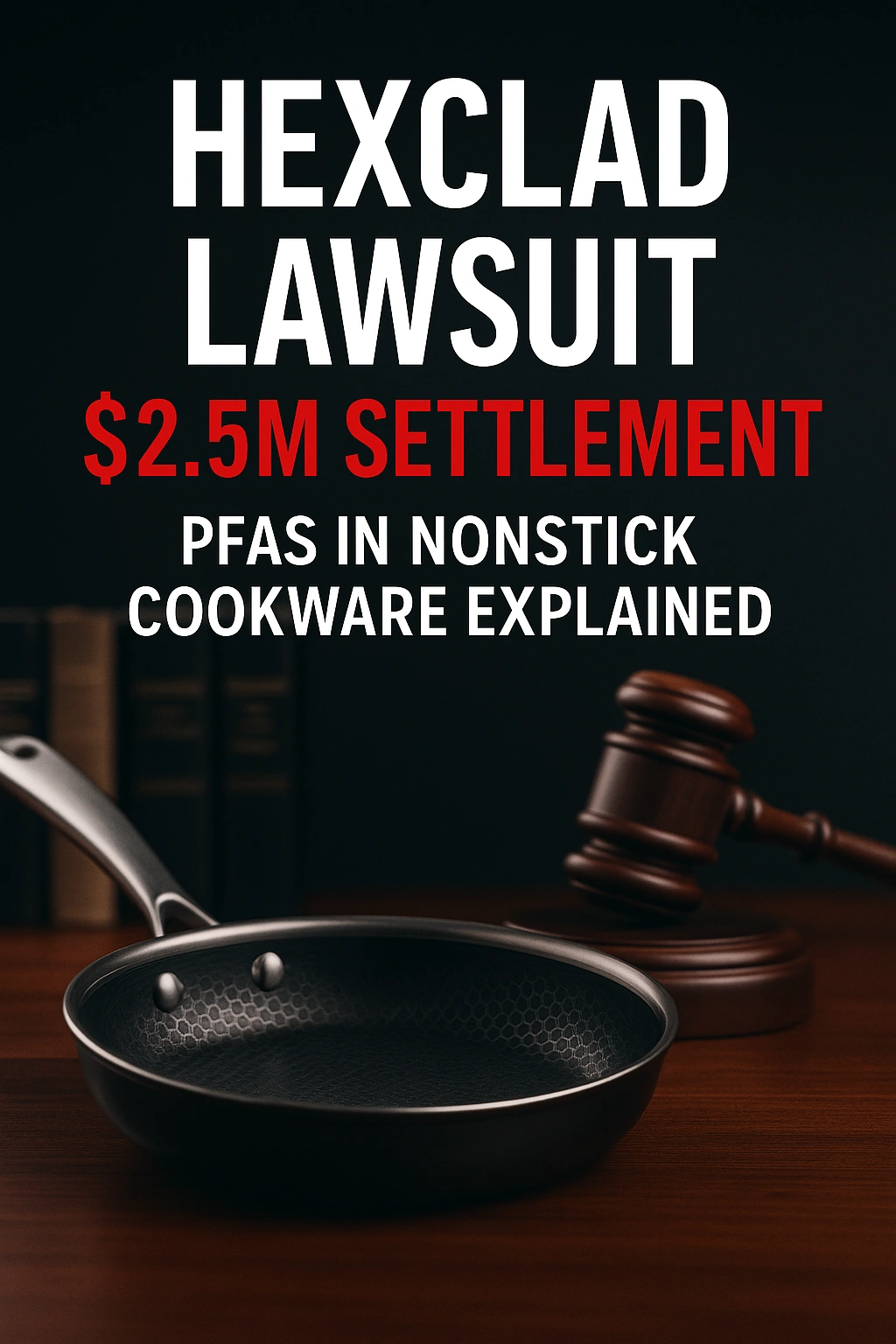
HexClad® is a registered trademark of HexClad Cookware, LLC. All mentions of HexClad, PFAS, PTFE, and PFOA are for educational purposes only. This article is written for consumer awareness and does not represent or endorse any brand.
1. Why the HexClad Lawsuit Matters: A Consumer Story
In 2022, U.S. consumers were widely exposed to HexClad’s marketing on Instagram and YouTube, featuring celebrity chef Gordon Ramsay. Ads promised “Non-Toxic, PFAS-Free, Scratch-Proof, Metal-Utensil Safe.” Source: Truth in Advertising report. Many consumers believed these claims until lawsuits challenged their accuracy.
That’s the story many Americans believed when buying HexClad. But in 2023, lawsuits claimed those promises weren’t entirely accurate. By 2025, HexClad agreed to a $2.5 million settlement over allegations of false advertising.
This case isn’t just about one brand. It’s about how much we can trust cookware labels, and what “PFAS-Free” really means.
2. The Timeline: From “PFAS-Free” Ads to $2.5M Settlement
HexClad Lawsuit Timeline (Cliburn v. HexClad Cookware, LLC)
February 2022 HexClad launched aggressive marketing campaigns in the U.S., promoting its cookware as “PFAS-Free,” “Non-Toxic,” and “PFOA-Free.” The brand leveraged social media and celebrity chef endorsements to build credibility and attract consumers.
Second Half of 2022 Questions began to surface in online forums and food safety communities. Consumers asked: “If the coating is PTFE, how can it be advertised as PFAS-Free?”
April 2023 Law firms representing consumers initiated investigations, gathering advertising materials and product information to evaluate the claims.
September 2023 A formal class action lawsuit, Cliburn v. HexClad Cookware, LLC, was filed. The core allegation: HexClad engaged in false or misleading advertising by claiming its cookware was PFAS-free.
First Half of 2024
The case moved into trial proceedings. Central legal questions included:
Should PTFE be classified as part of the PFAS family?
Does labeling cookware as “PFOA-Free” create the misleading impression that it contains no PFAS at all?
June 2024 During a court hearing, plaintiffs’ attorneys presented scientific evidence showing that PTFE’s chemical structure meets the definition of a PFAS.
Late 2024 Media outlets began covering the case extensively. Online search trends for “HexClad lawsuit” and “PFAS in cookware” surged.
February 2025 HexClad agreed to a $2.5 million settlement, applicable to U.S. consumers who purchased products between February 1, 2022 and March 31, 2024. The company denied wrongdoing but opted to settle.
March 2025 The official settlement website went live, providing claim forms, FAQs, and consumer guidance on eligibility.
Feb. 2022
HexClad ramps up marketing with “PFAS-Free” and “Non-Toxic” slogans
Feb. 2022
Second Half of 2022
Consumer groups file class action, alleging that HexClad pans still contain PTFE (a PFAS).
Second Half of 2022
Late 2023
Lawsuit proceeds: Cliburn v. HexClad Cookware, LLC.
Late 2023
Feb. 2025
Settlement reached: $2.5 million fund for U.S. buyers who purchased between Feb 2022 and Mar 2024.
👉 Common-sense takeaway: Labels like “PFOA-Free” and “PFAS-Free” aren’t interchangeable. If a pan contains PTFE, it is part of the PFAS family.
3. What Are PFAS, PFOA, and PTFE?
PFAS: A family of “forever chemicals” that don’t break down easily in the environment. U.S. EPA – PFAS Overview
PFOA/PFOS: Older PFAS, phased out due to health concerns.
PTFE (Teflon): A modern PFAS used in most nonstick pans.
👉Science says: PTFE is stable at normal cooking temps, but can degrade at 500°F (260°C), releasing fumes.
4. “PFOA-Free” vs “PFAS-Free”: The Language Problem
A “PFOA-Free” label is like saying: we didn’t use this one banned chemical. But the pan might still be coated in PTFE, another PFAS.
Consumers searching “PFOA-Free pans” often assume complete safety. In reality, most PTFE cookware carries this label while still containing PFAS. This confusion was central to the HexClad lawsuit.
5. The Real Impact of the HexClad Lawsuit on Shoppers
Consumer Awareness – Google searches for “PFAS cookware,” “PFAS-free pans,” and “non-toxic cookware” jumped after the lawsuit hit headlines.
Brand Scrutiny – Competing brands are now careful not to over-promise. Many switched language to “Ceramic Nonstick” or “No PTFE.”
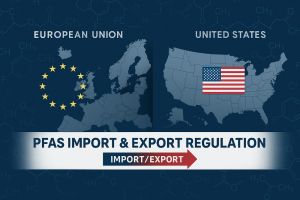
Regulatory Pressure – States like Maine and California are moving to restrict PFAS in consumer goods. The EU is ahead with sweeping bans.
6. Comparing Cookware Options: PTFE vs Ceramic vs Cast Iron vs Stainless Steel
Here’s the part shoppers really care about: what are my options?
Type
PFAS-Free?
Pros
Cons
Typical Price (US)
PTFE Nonstick (Teflon, HexClad, etc.)
❌ Contains PFAS
Smooth release, low oil, affordable mid-range
stable ≤260°C, degrades >260°C, fumes toxic to birds., PFAS concerns
$50–$150
Ceramic-Coated Nonstick
✅ PFAS-Free
Eco-friendly image, good release at first
Coating wears faster, may lose nonstick
$30–$120
Cast Iron (Enameled or Bare)
✅ PFAS-Free
Extremely durable, adds iron to food
Heavy, seasoning required
$20–$200
Stainless Steel
✅ PFAS-Free
Safe, durable, oven-safe, PFAS-free, NSF certified for food contact.
Sticking if not used with oil
$30–$250
Carbon Steel
✅ PFAS-Free
Restaurant favorite, lighter than cast iron
Needs seasoning, reacts with acid
$40–$180
👉 Narrative tip for readers: If you want restaurant-style durability, go cast iron or carbon steel. If you want ease, ceramic is decent—but don’t expect it to last 10 years. PTFE pans still dominate because of cooking convenience, but the PFAS conversation is changing that.
7. Price vs Performance: What Do You Really Pay For?
Lifespan vs Safety: While PTFE pans cost $50–150 and last 2–3 years, ceramic pans ($30–120) chip faster. Cast iron ($20–200) and stainless steel ($30–250) can last decades.
👉 True Value = not only price, but honest PFAS-free labeling.
Label Confusion: Both cheap and expensive pans often advertise “PFOA-Free,” but that doesn’t mean they’re free from all PFAS.
True Value: Instead of just comparing price tags, the real question is whether the cookware labeling is honest about PFAS—because that determines both your health risk and the product’s long-term trustworthiness.
8. Practical Tips to Choose Safer Nonstick Cookware
Don’t be fooled by “PFOA-Free.” Look for PFAS-Free labels.
Search for independent certifications (Greenguard, SGS testing).
Rotate cookware: have one stainless steel or cast iron for high heat, and a nonstick for eggs or delicate food.
Replace nonstick pans every few years; worn coatings = higher risk.
9. FAQ: Your Burning Questions
Q1. Is HexClad PFAS-Free?
No. HexClad pans use PTFE, which belongs to the PFAS family.
Q2. How much was the HexClad settlement?
$2.5 million, covering U.S. buyers from Feb 2022 to Mar 2024.
Q3. What cookware has zero PFAS?
Cast iron, stainless steel, glass, 100% ceramic.
Q4. Are ceramic pans really safer?
Yes, they are PFAS-free, but durability is an issue. Many lose nonstick properties within 1–2 years.
Q5. Is PTFE toxic?
Safe under normal use, but overheating above 500°F(260°C) can release fumes.
Q6. Should I throw away my nonstick pans?
Not necessarily. Use them properly, avoid overheating, and replace when scratched or worn.
Q7: Are PFAS regulated in cookware by the EU?
Yes, EU considering 2025 restrictions
Q8: What’s the safest cookware without chemicals?
Cast iron, stainless steel, carbon steel
Q9: Can ceramic pans still release metals?
Some cheap ceramics may leach heavy metals; look for FDA/SGS certification.
Consumer awareness can shift the market. Before your next cookware purchase, read the label carefully—PFOA-Free is not PFAS-Free. 👉 Want more science-based guides? Contact us here.
We use cookies to enhance your browsing experience, analyze website traffic, and improve our content. By continuing to use this site, you consent to our use of cookies. See our Cookie Policy for details.